

Finding the Right Meditation Centre in Bangalore
Modern life can leave the mind constantly occupied with work, responsibilities, relationships and uncertainty. When thoughts become overwhelming or emotional wellbeing feels difficult to manage, many people begin looking for a quiet space where they can slow down and reconnect with themselves.
Searching for a meditation centre Bangalore can be a meaningful first step for someone interested in developing a regular meditation practice. A structured environment can make it easier to learn the fundamentals, practise consistently and understand meditation beyond simply sitting quietly with closed eyes.
For people experiencing persistent sadness, anxiety, hopelessness or other symptoms associated with depression, meditation may be one supportive wellbeing practice. However, it should not be considered a replacement for appropriate medical or psychological care. Research indicates that mindfulness-based approaches may help with symptoms of anxiety and depression, although results can vary from person to person.
This guide explains what to look for in a meditation centre in Bengaluru, what beginners can expect and how to approach meditation in a safe and practical way.
Why Consider a Meditation Centre in Bangalore?
Learning meditation independently through an app or video can be useful, but some people benefit from learning in a structured environment.
A meditation centre can provide:
- A dedicated space for regular practice
- Guidance from instructors
- A routine that encourages consistency
- Opportunities to learn different meditation approaches
- A community of people with similar interests
- Time away from everyday distractions
- Guidance on developing awareness and concentration
For someone new to meditation, having a teacher or structured programme can also make the practice less confusing.
Meditation is not simply about trying to stop thinking. Different practices may involve awareness of breathing, attention to sensations, repetition of a word or phrase, or observing thoughts without judgement.
How Meditation May Support Emotional Wellbeing
Meditation is increasingly studied as a complementary approach to mental wellbeing.
Mindfulness involves deliberately paying attention to the present moment with greater awareness and less judgement. Research reviewed by the National Center for Complementary and Integrative Health suggests that mindfulness-based practices may be helpful for anxiety and depression, although the evidence and outcomes differ across individuals and practices.
Developing awareness
Meditation can encourage practitioners to notice thoughts and emotions rather than immediately reacting to them.
This does not mean negative thoughts disappear. Instead, the practitioner gradually develops greater awareness of what is happening internally.
Creating moments of calm
A regular practice can create a period in the day that is intentionally separated from constant activity, notifications and external demands.
Supporting a regular routine
Consistency is important when learning any contemplative practice. A structured class or centre can make it easier to establish a routine.
Encouraging self-reflection
Some forms of meditation and spiritual practice encourage deeper reflection about one’s thoughts, emotions, habits and way of living.
However, meditation affects individuals differently. It is important to avoid promises of guaranteed emotional or mental-health outcomes.
What to Look for in a Meditation Centre Bangalore
Not every centre will teach meditation in the same way. Before joining, consider whether its approach matches your expectations.
1. Understand the meditation approach
Ask what type of practice is taught.
Some centres focus primarily on mindfulness or breath awareness, while others may incorporate spiritual teachings, mantra-based practices, yoga, kriya or other traditional approaches.
Choose a centre whose philosophy you understand and feel comfortable exploring.
2. Look for structured guidance
Beginners often benefit from clear instructions.
A good programme should explain what participants are expected to practise rather than simply asking them to meditate without context.
3. Consider the learning environment
The physical environment can influence your ability to concentrate.
Consider:
- Cleanliness
- Noise levels
- Accessibility
- Class size
- Session timings
- Overall atmosphere
- Travel convenience
For someone living or working in Bengaluru, a conveniently located centre can make regular attendance easier.
4. Ask about the programme before joining
Before enrolling in meditation classes in Bangalore, ask about:
- Duration of the programme
- Session frequency
- Beginner suitability
- Teaching methodology
- What happens during a typical session
- Whether guidance is available outside sessions
- Any practices or commitments expected from participants
Clear information helps you make an informed decision.
Meditation Classes in Bangalore: What Beginners Can Expect
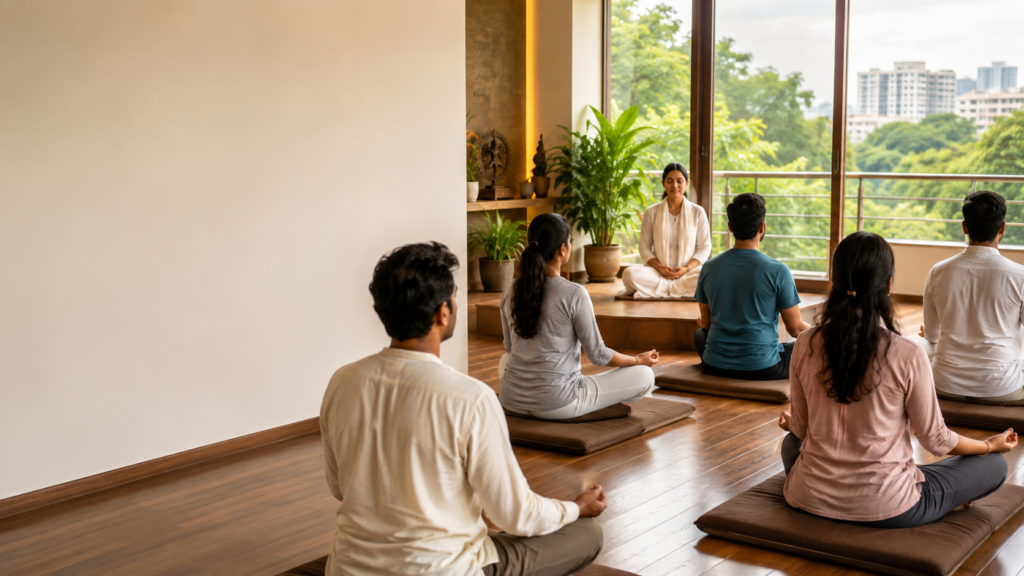
Your first meditation class may feel different from what you expect.
Rather than trying to achieve immediate mental silence, beginners are generally introduced to a process of paying attention and returning to the chosen focus when the mind wanders.
A session may include:
- Settling into a comfortable position.
- Bringing attention towards the practice.
- Following guided instructions.
- Noticing thoughts, emotions or physical sensations.
- Returning attention when distractions arise.
- Gradually developing consistency through repeated practice.
The exact structure depends on the meditation tradition and the centre.
The most important thing for beginners is not to judge themselves based on how “successful” a session feels.
A distracted mind does not mean you are bad at meditation.
Meditation and Depression: What You Should Know
People experiencing depression may naturally search for meditation because they want relief from difficult thoughts and emotions.
Meditation may be a useful complementary practice, but it is important to maintain realistic expectations.
Research suggests mindfulness-based approaches can have benefits for depression and anxiety, but the evidence varies by intervention, population and study quality.
Meditation should therefore be viewed as one possible part of a broader wellbeing approach rather than a guaranteed treatment.
When professional help matters
If low mood, loss of interest, hopelessness, sleep changes, difficulty functioning or other concerning symptoms persist, consider speaking with a qualified mental-health professional.
If someone is experiencing thoughts of self-harm or suicide, meditation should not be used as the sole response. Immediate professional or emergency support is important.
This distinction is especially important when choosing a meditation centre: spiritual guidance and mental-health treatment are not necessarily the same service.
Common Mistakes Beginners Make
Starting meditation with unrealistic expectations can make the experience unnecessarily difficult.
Expecting an empty mind
Thoughts naturally arise. The purpose of many meditation practices is not to force the mind to become completely blank.
Judging every session
Some days may feel peaceful while others may feel restless. This does not automatically indicate whether the practice is working.
Practising inconsistently
Meditation is easier to understand when practised regularly rather than occasionally.
Choosing a centre only because of claims
Avoid choosing a programme solely because it promises instant transformation, guaranteed healing or dramatic results.
Ignoring individual needs
A meditation practice that suits one person may not suit another. Your personal circumstances, expectations and comfort matter.
Practical Tips for Choosing Meditation Classes in Bangalore
Before joining a programme, create a simple checklist.
| Factor | What to Consider |
|---|---|
| Teaching Style | Is the practice clearly explained? |
| Experience Level | Is it suitable for beginners? |
| Location | Can you attend consistently from your area in Bengaluru? |
| Schedule | Do timings fit your routine? |
| Philosophy | Are you comfortable with the centre’s approach? |
| Guidance | Is support available when you have questions? |
| Expectations | Are benefits explained realistically? |
| Mental-Health Considerations | Is professional support recommended when necessary? |
The goal is not simply to find the nearest centre. It is to find a practice and learning environment you can approach consistently and comfortably.
Who Can Benefit From a Meditation Centre?
Meditation centres may be suitable for people who want to:
- Develop a regular meditation routine
- Learn meditation from a structured programme
- Explore spiritual practices
- Improve self-awareness
- Create dedicated time for reflection
- Develop greater awareness of thoughts and emotions
- Explore practices for inner peace and personal growth
Beginners do not need to have extensive meditation experience.
At the same time, meditation is not necessarily appropriate as a standalone response to every mental-health concern.
Exploring Meditation at Upasana Foundation
For people in Bengaluru looking for a structured spiritual environment, Upasana Foundation offers practices centred around sadhana, awareness and inner growth. Its website describes a spiritual path involving Sadhana, Seva and Love, with programmes including Manoshakthi, Shakthi Kriya, Sammohana Tantra and Kundalini Diksha.
Manoshakthi is described by the organisation as a practice intended to strengthen the mind, develop clarity and cultivate emotional balance. Shakthi Kriya focuses on structured kriya practice and spiritual growth, while other offerings follow their respective spiritual traditions.
The foundation is based in Rajarajeshwari Nagar, Bengaluru, Karnataka, and provides contact information for enquiries and sadhana-related guidance.
If you are considering joining, take time to understand the specific practice, expectations and suitability for your personal situation before making a decision.
How to Build a Sustainable Meditation Practice
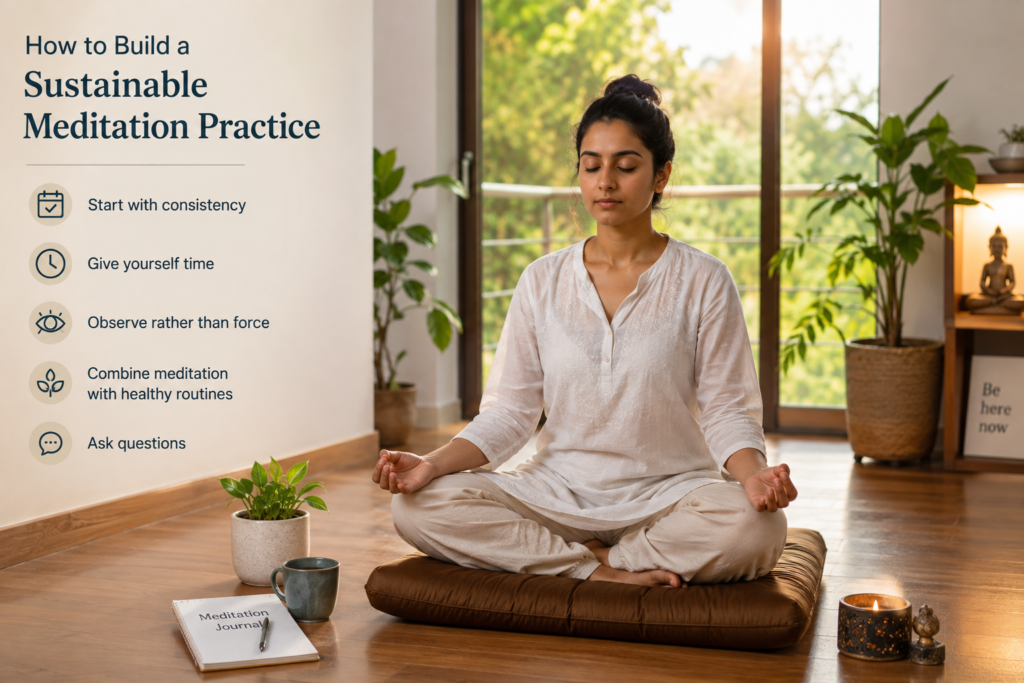
inding a meditation centre is only the beginning. The long-term value of meditation depends largely on developing a sustainable relationship with the practice.
Start with consistency
Instead of worrying about achieving a perfect session, focus on creating a regular routine.
Give yourself time
Meditation is a practice rather than a one-time experience. Your understanding may develop gradually.
Observe rather than force
When thoughts arise, notice them and return to the practice according to the instructions you have been given.
Combine meditation with healthy routines
Adequate sleep, physical activity, social connection and professional support when needed can all play important roles in overall wellbeing.
When Should You Seek Professional Assistance?
Meditation can be part of a wellbeing routine, but there are situations where professional help should take priority.
Consider speaking with a qualified doctor or mental-health professional if you are experiencing:
- Persistent or worsening low mood
- Severe anxiety or distress
- Significant changes in sleep or appetite
- Difficulty managing everyday responsibilities
- Feelings of hopelessness
- Thoughts of self-harm or suicide
- Symptoms that are interfering substantially with your life
Meditation and professional mental-health care can sometimes exist alongside each other. Choosing one does not necessarily mean you must reject the other.
1. What should I look for in a meditation centre in Bangalore?
Look for a centre that clearly explains its meditation method, teaching approach, programme structure and expectations. Consider location, timings, beginner suitability and the overall environment. Most importantly, choose a practice that aligns with your personal goals rather than relying on promises of guaranteed results.
2. Can meditation help with depression?
Research suggests that some mindfulness-based practices may help reduce symptoms associated with depression and anxiety. However, results vary, and meditation should not automatically replace professional mental-health treatment. People experiencing significant or persistent symptoms should consider speaking with a qualified mental-health professional.
3. Are meditation classes in Bangalore suitable for beginners?
Yes, many meditation programmes are designed to introduce beginners to structured practices. Before enrolling, ask whether the programme is beginner-friendly and what will be covered during the sessions. A clear introduction can help you understand the practice without feeling pressured to achieve immediate results.
4. How often should I practise meditation?
There is no single schedule that works for everyone. The most useful approach is generally one you can maintain consistently. Follow the instructions provided by your teacher or programme and gradually develop a sustainable routine rather than trying to practise excessively at the beginning.
5. Can meditation replace therapy for depression?
Meditation should not automatically be considered a replacement for therapy or medical treatment. It may serve as a complementary wellbeing practice, but depression can require professional assessment and treatment. If symptoms are persistent, severe or affecting daily life, consult a qualified mental-health professional.
6. What happens during a meditation class?
The structure varies between traditions and centres. A session may include settling into a comfortable position, guided attention, breathing or awareness practices, observation of thoughts and emotions, and instructions for continued practice. Ask the centre about its specific session format before joining.
7. How do I choose the right meditation centre in Bengaluru?
Consider the centre’s meditation philosophy, instructor guidance, location, schedule, programme structure and suitability for your experience level. It is also useful to understand what the centre does and does not claim meditation can achieve, particularly if you are seeking support for emotional or mental-health concerns.
1. What should I look for in a meditation centre in Bangalore?
Look for a centre that clearly explains its meditation method, teaching approach, programme structure and expectations. Consider location, timings, beginner suitability and the overall environment. Most importantly, choose a practice that aligns with your personal goals rather than relying on promises of guaranteed results.
2. Can meditation help with depression?
Research suggests that some mindfulness-based practices may help reduce symptoms associated with depression and anxiety. However, results vary, and meditation should not automatically replace professional mental-health treatment. People experiencing significant or persistent symptoms should consider speaking with a qualified mental-health professional.
3. Are meditation classes in Bangalore suitable for beginners?
Yes, many meditation programmes are designed to introduce beginners to structured practices. Before enrolling, ask whether the programme is beginner-friendly and what will be covered during the sessions. A clear introduction can help you understand the practice without feeling pressured to achieve immediate results.
4. How often should I practise meditation?
There is no single schedule that works for everyone. The most useful approach is generally one you can maintain consistently. Follow the instructions provided by your teacher or programme and gradually develop a sustainable routine rather than trying to practise excessively at the beginning.
5. Can meditation replace therapy for depression?
Meditation should not automatically be considered a replacement for therapy or medical treatment. It may serve as a complementary wellbeing practice, but depression can require professional assessment and treatment. If symptoms are persistent, severe or affecting daily life, consult a qualified mental-health professional.
6. What happens during a meditation class?
The structure varies between traditions and centres. A session may include settling into a comfortable position, guided attention, breathing or awareness practices, observation of thoughts and emotions, and instructions for continued practice. Ask the centre about its specific session format before joining.
7. How do I choose the right meditation centre in Bengaluru?
Consider the centre’s meditation philosophy, instructor guidance, location, schedule, programme structure and suitability for your experience level. It is also useful to understand what the centre does and does not claim meditation can achieve, particularly if you are seeking support for emotional or mental-health concerns.