Loading..

Mind Power Course: Build Focus, Clarity and Inner Strength

Mind Power Course: Build Focus, Clarity and Inner Strength

mind power course

The mind influences how we perceive situations, respond to challenges and make everyday decisions. When thoughts become repetitive, attention becomes scattered or emotions feel difficult to manage, developing greater self-awareness can become an important part of personal growth.

A mind power course introduces structured practices designed to help individuals understand their thoughts, strengthen attention and develop greater awareness of their inner patterns. Depending on the programme, these practices may include meditation, breathing techniques, Sankalpa, reflection and other spiritual or mind-training practices.

For people in Bengaluru looking for a structured approach to inner development, Upasana Foundation offers Manoshakti, a programme focused on understanding and reshaping the inner world through guided spiritual practices.

However, it is important to understand that mind-training or meditation should not automatically be considered a treatment for depression or another mental-health condition. Depression can require professional psychological or medical care, and appropriate treatment depends on the individual’s circumstances.

What Is a Mind Power Course?

A mind power course is generally a structured learning programme focused on developing greater awareness of the mind and improving the way a person relates to thoughts, emotions, attention and behaviour.

Rather than attempting to eliminate every negative thought, effective mind-training approaches can encourage individuals to observe their mental patterns and respond more consciously.

A course may explore areas such as:

  • Understanding recurring thought patterns
  • Developing concentration and attention
  • Building self-awareness
  • Working with emotions
  • Practising meditation
  • Using breathing or relaxation techniques
  • Developing mental discipline
  • Creating purposeful intentions
  • Developing inner calm and clarity

The exact methods vary from one programme to another, so prospective participants should understand what practices are actually taught before enrolling.

How Does Mind Power Training Work?

The mind is constantly processing information from our surroundings, memories, expectations and experiences. Over time, people can develop habitual ways of thinking and reacting.

Mind-training practices attempt to create greater awareness of these patterns.

1. Awareness of Thoughts

The first step is noticing what is happening internally.

Instead of immediately reacting to every thought, a person can learn to observe:

  • What they are thinking
  • How frequently certain thoughts occur
  • What situations trigger particular emotions
  • How thoughts influence behaviour

This does not mean suppressing difficult thoughts. It means developing greater awareness of them.

2. Developing Attention

Modern life involves continuous notifications, multitasking and information overload. Regular meditation and focused practices can encourage people to spend more time deliberately directing their attention.

Over time, this may support better awareness of where attention is going and how easily it becomes distracted.

3. Understanding Emotional Patterns

Emotional awareness is another important part of inner development.

A person may begin to recognise connections between situations, thoughts and emotional responses. This awareness can create space between an experience and an immediate reaction.

4. Building Mental Discipline

Mental strength is not simply about forcing yourself to think positively.

It can involve developing the discipline to:

  • Pause before reacting
  • Observe thoughts without immediately accepting them
  • Continue healthy practices consistently
  • Reflect on personal behaviour
  • Maintain purposeful routines

This is one reason structured guidance can be useful for people who find it difficult to maintain a practice independently.

What Is a Subconscious Mind Power Course?

The phrase “subconscious mind power course” is commonly used in personal-development and spiritual-learning contexts.

The subconscious is often described in popular language as the part of the mind associated with learned patterns, memories, habits and automatic responses. However, people should be cautious about claims that a course can instantly “reprogramme” the subconscious or guarantee specific life outcomes.

A responsible subconscious mind power course should encourage awareness and practical self-development rather than promising guaranteed results.

The useful questions to ask are:

  • What specific practices are taught?
  • Is the course guided by an experienced teacher?
  • How much daily practice is expected?
  • Is the programme suitable for beginners?
  • Does it encourage realistic expectations?
  • Is appropriate professional help recommended when necessary?

What Can You Learn From a Mind Power Course?

The learning outcomes depend on the programme, its methodology and the participant’s consistency.

At Upasana Foundation, the Manoshakti programme describes practices around Sankalpa, understanding the hidden aspects of the mind, inner strength, meditation and developing a more balanced approach to life.

Greater Self-Awareness

Regular reflection can help you become more aware of your thoughts, emotional responses and behavioural patterns.

Improved Mental Clarity

When you learn to observe thoughts rather than immediately follow every thought, you may develop a clearer understanding of what deserves your attention.

Better Focus

Meditative practices can provide an opportunity to practise sustained attention and reduce habitual distraction.

Emotional Awareness

Understanding emotional patterns can help you recognise how particular situations affect you.

Inner Discipline

A consistent spiritual or meditation routine requires commitment. Over time, the routine itself can encourage greater discipline.

Personal Growth

Mind-training can become part of a broader process of understanding yourself, your values and your direction in life.

These benefits should be viewed as potential outcomes of regular practice rather than guaranteed results.

Can a Mind Power Course Help Someone Experiencing Depression?

This question requires particular care.

Depression is more than ordinary sadness or temporary stress. The World Health Organization describes depression as a common mental disorder that can involve persistent low mood or loss of interest, along with symptoms such as poor concentration, low self-worth, hopelessness, sleep changes and low energy. Effective treatments include psychological therapies and, depending on the situation, medication.

Therefore, a mind power course should not be presented as a cure for depression.

Meditation, self-awareness and structured personal-development practices may be considered as complementary wellbeing activities, but someone experiencing significant or persistent depressive symptoms should speak with an appropriately qualified healthcare professional.

If someone has thoughts of suicide or immediate self-harm, they should seek urgent professional or emergency assistance rather than relying on a meditation course.

In Bengaluru, NIMHANS provides mental-health resources and services, including resources related to depression and psychological wellbeing.

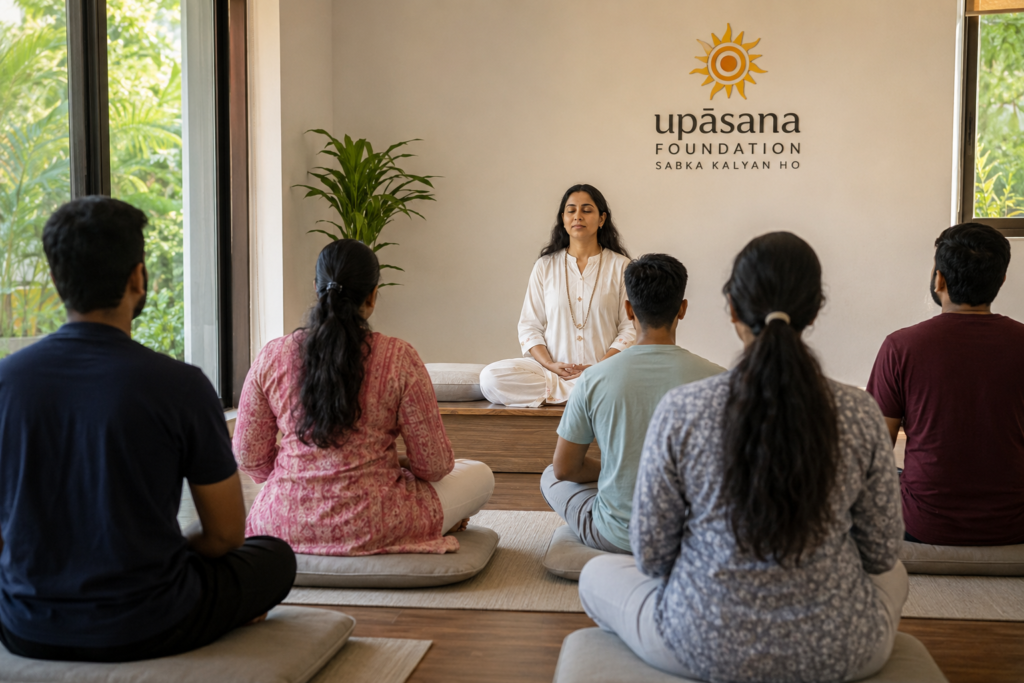
Mind Power Course vs Independent Meditation Practice

Here is the cleaned and properly formatted table:

FactorMind Power CourseIndependent Meditation
GuidanceStructured instructionSelf-directed
LearningFollows a planned programmeDepends on individual resources
AccountabilityUsually higherDepends on personal discipline
CommunityMay provide group supportUsually limited
TechniqueSpecific methods are taughtTechnique chosen independently
FeedbackMay be available from instructorsUsually unavailable
Suitable forPeople wanting structured learningPeople comfortable practising independently

Neither approach is automatically better for everyone. The right choice depends on your goals, experience and preferred learning style.

Who Can Consider a Mind Power Course?

A structured programme may appeal to people who want to:

  • Develop greater self-awareness
  • Learn meditation or spiritual practices
  • Improve their ability to focus
  • Understand recurring mental patterns
  • Develop greater emotional awareness
  • Establish a disciplined personal practice
  • Explore inner growth and self-realisation

Upasana Foundation states that its programmes are intended for people with a sincere interest in self-development and spiritual growth.

Prior meditation experience is not necessarily required for every programme, but prospective participants should check the specific requirements of the course they are considering.

Why Consider Manoshakti at Upasana Foundation?

For someone specifically looking for a mind power course in Bengaluru, Manoshakti is particularly relevant to the search because its programme focuses on the mind, Sankalpa, inner strength, meditation and personal transformation.

Upasana Foundation describes its broader approach as combining Sadhana, Seva and spiritual growth, with an emphasis on awareness, inner transformation and self-realisation.

The organisation is based in Bengaluru, Karnataka, and provides spiritual learning programmes and guided practices.

The right approach is to understand the course methodology, expectations and suitability before making a decision.

Common Mistakes to Avoid When Choosing a Mind Power Course

Choosing a Course Because of Guaranteed Promises

Be cautious of programmes claiming guaranteed wealth, instant healing, complete mind control or guaranteed freedom from depression.

Personal development varies from person to person.

Expecting Immediate Transformation

Meditation and self-development generally require consistency. A single session is unlikely to replace an established practice.

Using Meditation as a Replacement for Mental-Health Treatment

If you are experiencing persistent depressive symptoms, severe anxiety, suicidal thoughts or significant difficulties functioning, professional help should take priority.

Ignoring the Course Methodology

Do not enrol simply because the title sounds attractive. Understand what techniques, practices and guidance are actually provided.

Focusing Only on Results

The process of developing awareness and discipline can be as important as any particular outcome.

Practical Tips Before Joining a Mind Power Course

Before enrolling, consider these five questions:

  • What is my primary goal?
    Is it meditation, focus, self-awareness, spiritual growth or emotional wellbeing?
  • What does the course actually teach?
    Review the curriculum rather than relying only on promotional claims.
  • Who provides the guidance?
    Understand the teacher, methodology and type of support offered.
  • Can I commit to regular practice?
    Consistency is important for developing any new practice.
  • Do I need professional mental-health support?
    If you are experiencing symptoms of depression or another mental-health condition, consider speaking with a qualified professional.

When Should You Seek Professional Assistance?

A meditation or mind power programme may be appropriate for personal development, but it is not a substitute for clinical care.

Consider professional assistance if you experience persistent:

  • Feelings of hopelessness
  • Loss of interest in everyday activities
  • Significant sleep or appetite changes
  • Severe anxiety or distress
  • Difficulty functioning at work or home
  • Thoughts about death or suicide

The WHO recommends seeking care when symptoms of depression are present and notes that effective psychological treatments are available.

If you are already receiving treatment, do not stop medication or therapy because of advice from a meditation or spiritual programme. Discuss complementary practices with your healthcare professional where appropriate.

How to Start Developing Your Mind Power

You do not need to make dramatic changes immediately.

Start with a simple routine:

Step 1: Set aside a consistent time
Choose a practical time when you are unlikely to be interrupted.

Step 2: Begin with awareness
Notice your thoughts, breathing and emotional state without immediately judging them.

Step 3: Practise consistently
A manageable routine is more sustainable than an unrealistic schedule.

Step 4: Reflect on your experience
Notice changes in your awareness, attention and reactions over time.

Step 5: Seek guidance when needed
If you want a structured approach, consider learning through an organised meditation or spiritual programme.

FAQ Section

1. What is a mind power course?

A mind power course is a structured programme designed to develop greater awareness of thoughts, attention, emotions and behavioural patterns. Depending on the programme, it may include meditation, breathing practices, Sankalpa, reflection and other spiritual or personal-development techniques.

Not necessarily. Meditation may be one component of a mind power course, while a broader programme can include additional practices involving self-awareness, concentration, breathing, intention and spiritual development. The exact structure depends on the course provider and methodology.

A subconscious mind power course generally refers to personal-development training focused on understanding automatic thought patterns, habits and responses. Because “subconscious” is often used broadly in popular self-help language, it is important to examine the actual techniques and claims made by a particular course.

A mind power course should not be presented as a cure for depression. Depression can require professional psychological or medical treatment. Meditation and self-awareness practices may be considered complementary wellbeing activities, but people experiencing significant depressive symptoms should seek appropriate professional care.

Many meditation and spiritual programmes can be suitable for beginners, but requirements vary. Check whether the specific course requires previous experience, how the sessions are structured and what level of daily practice is expected before enrolling.

People in Bengaluru can explore structured meditation and spiritual-learning programmes offered by organisations such as Upasana Foundation. Its Manoshakti programme focuses on mind-related practices, Sankalpa, meditation and inner development.

There is no universal timeframe. Mental strength and self-awareness develop differently for different people and depend on the practices used, consistency, personal circumstances and the individual’s goals. Sustainable practice is generally more useful than expecting an immediate transformation.

Conclusion

A mind power course can provide a structured way to explore attention, self-awareness, meditation, emotional awareness and inner development. The most useful approach is to choose a programme based on its actual practices and methodology rather than promises of instant transformation.

For people in Bengaluru interested in exploring these areas through a spiritual-learning framework, Upasana Foundation’s Manoshakti programme provides practices centred on the mind, Sankalpa, meditation and inner strength.

If you are experiencing depression or significant emotional distress, remember that a spiritual or meditation programme should complement—not replace—appropriate professional mental-health care.

If you are ready to explore structured mind and meditation practices, you can learn more about the programme and book your place through Upasana Foundation.